The Forty-First Country: Why I Traded Global Wandering for a Local Barista
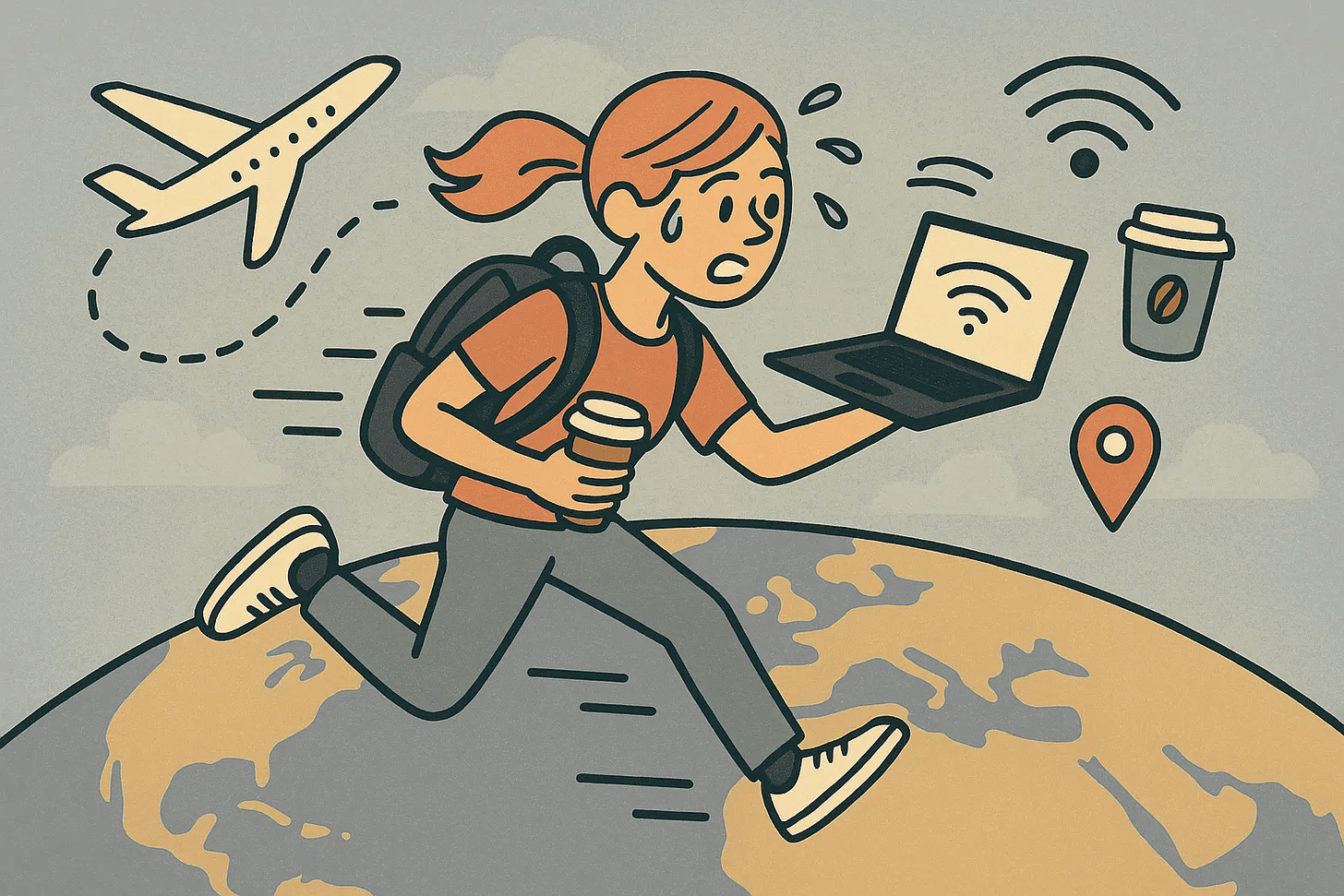
The digital nomad dream is usually sold in a single, perfectly framed image: a glossy laptop screen, a condensation-beaded coconut, and an infinity pool merging into a turquoise horizon. For seven years, I was the poster child for that dream.
By the time I hit my late thirties, I had stamped my passport in forty different countries. I had answered corporate emails from a shaky overnight train rattling through the mountains of Vietnam. I had closed five-figure marketing deals while battling dial-up speeds in a remote surf village. I was a professional ghost, answerable to no timezone and anchored to no land. I openly laughed in the face of the traditional grind and pitied the people who signed twelve-month leases. To me, routine was a self-inflicted prison sentence.
But the glossy squares never show the shadow side of the borderless life. They don't show the suffocating panic of landing in a dark, unfamiliar city at 2:00 AM because your budget flight was delayed, praying the Wi-Fi at your rental actually works because you have a client presentation in four hours. They don't show the dull ache of the "two-week expiration date"—the exhausting cycle of arriving in a co-working space, making deep, soulful connections with fellow travelers, and then packing your life into a 60-liter backpack to say goodbye all over again.
By country number forty, the momentum that had fueled me for nearly a decade simply evaporated. I woke up in a beautifully minimalist apartment, looked out at a stunning sea, and felt absolutely nothing. My body was locked in chronic fatigue. My creativity was dead. The simple act of packing my suitcase felt like trying to lift a boulder. The constant, relentless adaptation—figuring out where to buy groceries, how the local transit worked, what the emergency numbers were—had fractured my focus. I wasn’t free anymore. I was just running. The movement had broken me.
The turning point came when I realized I couldn’t remember the layout of the space I had stayed in just three weeks prior. In chasing everything, I had ended up with nothing tangible. I had forty countries' worth of keys, but not a single door that belonged to me. I decided to stop. I took a leap of faith that felt more terrifying than any solo flight across the Atlantic: I rented a permanent apartment, unpacked my bags, and put the suitcase in the back of the closet.
The first few weeks were marked by an intense, phantom restlessness. Every time a newsletter advertised cheap flights to Lisbon or Bangkok, my mouse hovered over the "Book Now" button. But I forced myself to stay. I bought a real plant. I hung art on the walls. I established a morning routine that didn’t depend on a flight itinerary.
And then, it happened. On a crisp autumn morning, I walked down into the small, sunlit café at the corner of my block. The guy behind the counter—a local barista with a permanent smear of espresso flour on his apron—looked up from the machine, smiled, and nodded. "The usual, Corina? Flat white with oat milk?"
A strange, overwhelming wave of emotion hit me right there in the middle of the crowded café. In forty countries, I had seen pyramids, hiked glaciers, and watched sunsets over ancient temples. But none of it compared to the profound, grounding thrill of being known.
I realized then that true freedom isn't the chaotic ability to go anywhere at any second; it’s the peace of mind that comes from having a dedicated sanctuary to return to. It’s the deep work you can only achieve when your brain isn't burning energy on survival logistics. Routine wasn't my prison—it was my gravity. And sometimes, the ultimate adventure isn't crossing another border, but finally allowing yourself to arrive.